Soldering Fume Extraction
Solutions for Soldering Fume Extraction
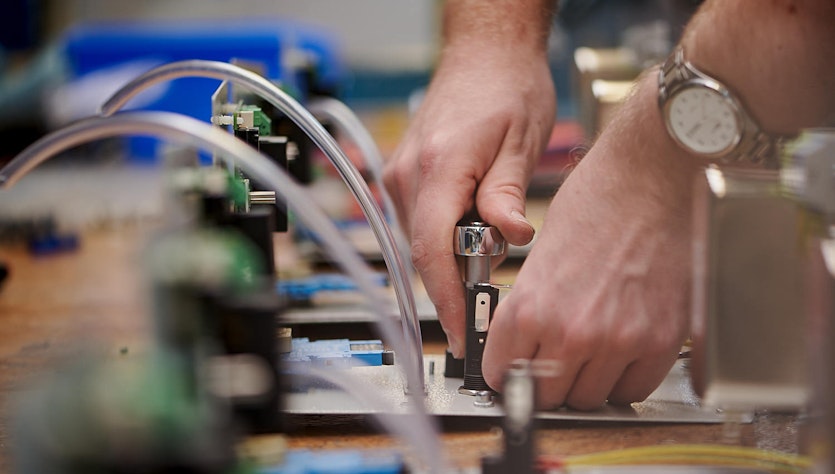
Do you utilize an automated soldering system or execute hand soldering and require an air purification solution that meets the requirements of your processes and on-site conditions?
Our LRA extraction unit series provides a comprehensive solution for soldering fume extraction and vapor filtration technologies – ideal for both manual workplaces and automated or semi-automated productions.
Whether you’re using a soldering iron for manual soldering or a fully automated soldering system, our units are designed to support industry demands, protecting operator health as well as process quality in the most efficient way.
For mobile, stationary, and finally versatile utilization, we offer a wide range of solutions − flexible and compact soldering fume extractors that can be adapted to diverse workplace conditions and specific air pollutant requirements. These units, available globally, integrate HEPA and gas filter technology to capture dust, fumes, and vapors effectively, promoting a healthier working environment.
Our filter systems are not only quiet but also powerful, delivering dependable air filtration with minimal disruption to workflow. With options for extraction arm and further accessory attachments and a variety of control settings, operators can easily activate and adjust the systems according to their needs. We maintain a range of items in stock for prompt delivery, ensuring that you always have access to the equipment needed to tackle air quality problems head-on.
Systems for Soldering Fume Extraction


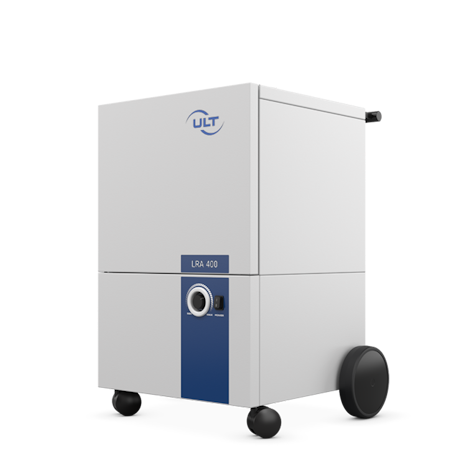

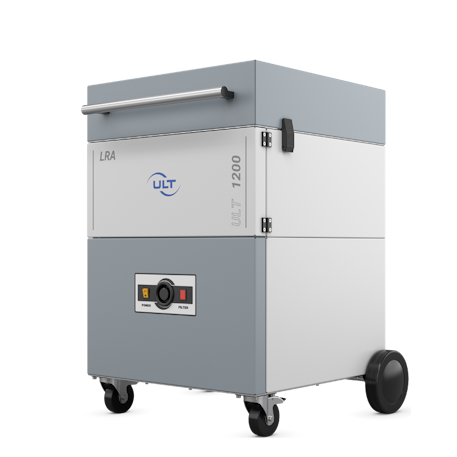

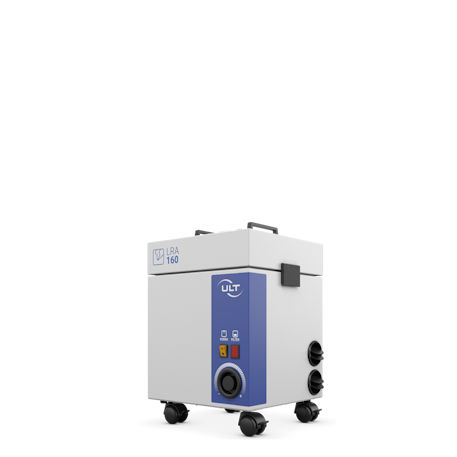

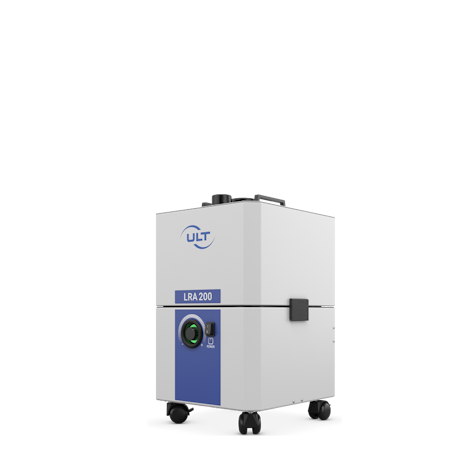
Flexible solution for mobile soldering fume extraction
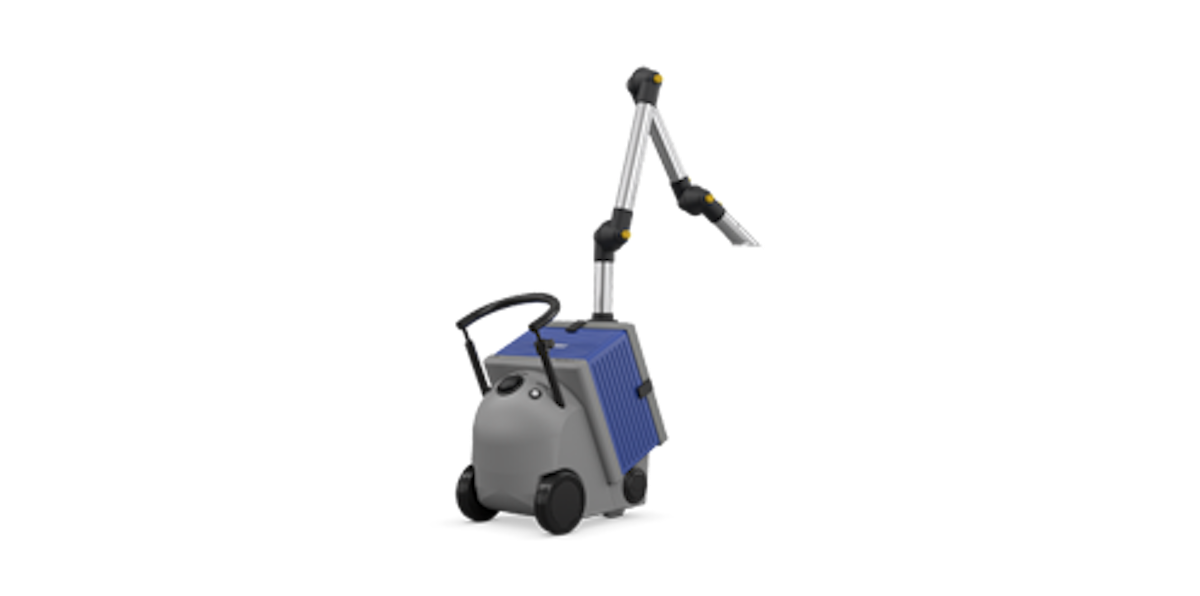
JUMBO Filtertrolley LRA
The solution developed for mobile utilization with a unique design is the JUMBO Filtertrolley LRA. The flexible soldering fume extractor can be variably adapted to a wide variety of workplace and air pollutant conditions.
The filter system is very quiet and yet powerful.


Your demands are our motivation
Please contact us for more information on which kit would best meet your needs or to discuss custom options available for your specific industry requirements.





The importance of soldering fume extraction
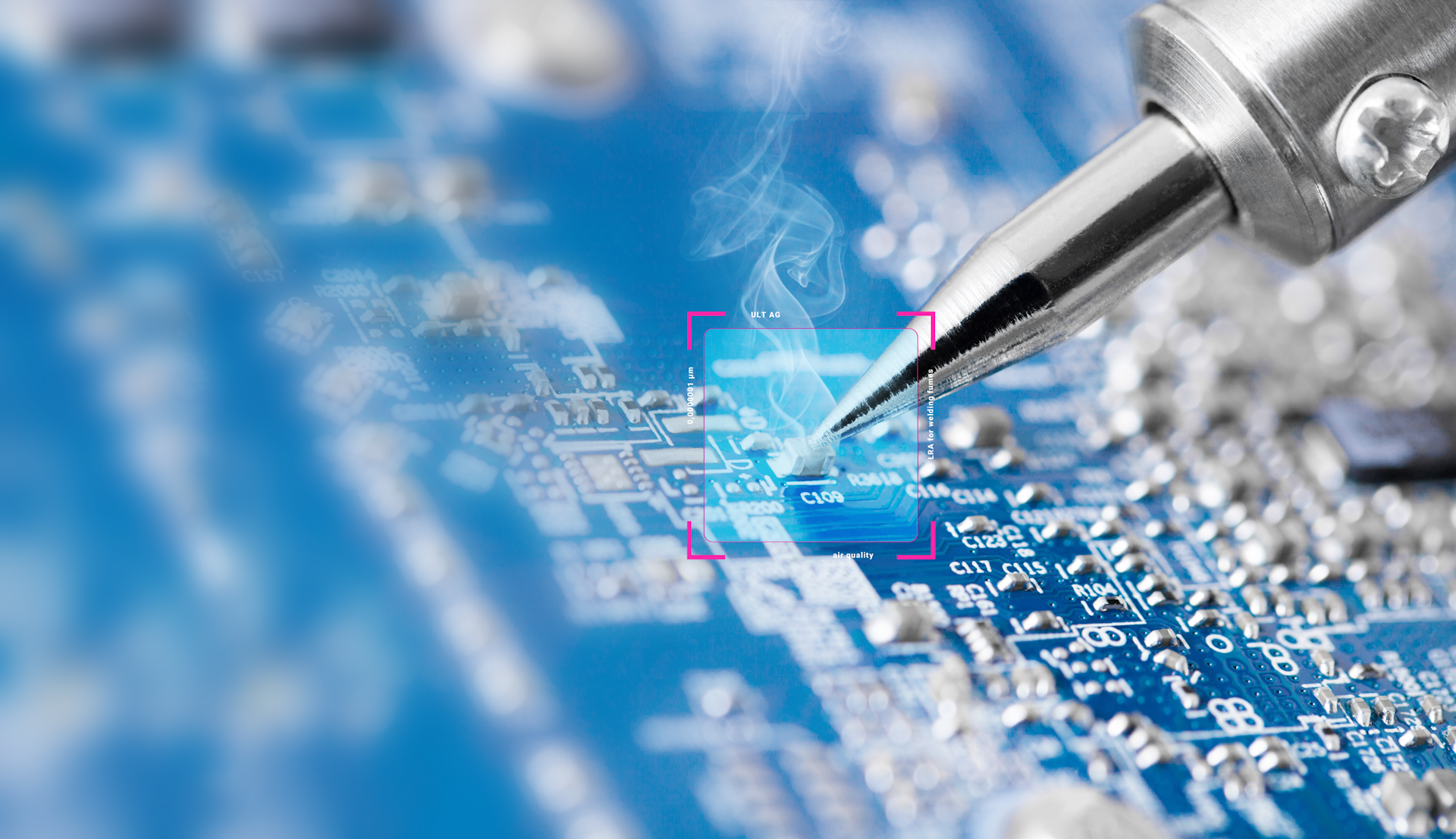
Depending on the areas of application of the finished assembly and the requirements of the components, various soldering alloys and flux agents are considered. During the soldering process, large parts of the flux agent and a small portion of the solder will evaporate, generating fumes that contain aerosols and particles.
These airborne pollutants, particularly aldehydes, can pose significant occupational health risks if inhaled, especially in the electronics industry. Materials containing colophony, for instance, release harmful substances, some of which may be carcinogenic. Additional gases from coatings, adhesives, or substrates can also generate fumes and sticky aerosols, leading to contamination on products and soldering machines alike.
Such contaminants affect the workplace, increasing cleaning and maintenance needs, which, in turn, raise operational costs. The buildup of particulate matter can impair the functionality of machines and even corrode manufactured products, which negatively impacts their quality and longevity.t is not sufficient to provide for only good ventilation in the manufacturing environment. The use of efficient fume extraction technology is mandatory.
To effectively manage the range of solder fumes generated during production, simple ventilation is insufficient. The use of fume extraction systems that incorporate advanced extraction technology is mandatory in the electronics industry. Solder extraction units are designed to capture emissions as close as possible to the source, ensuring that the maximum number of pollutants is collected directly. The further the extraction point is from the source, the lower the efficiency and the higher the energy consumption, which could compromise occupational safety.
Our range includes a variety of fume extraction units suitable for all application scenarios, whether for manual soldering stations or automated soldering systems. These units allow for complete protection by reducing the inhalation of harmful substances and providing optimal air quality at the bench. By positioning the extraction units near the workplace, we offer efficient solutions that meet occupational health standards and are tailored to each buyer's needs.
Browse our full range of fume extraction technology to find the ideal solution that ensures employee safety and maintains the quality of your products. For any questions, we offer advice to help you select a solution that aligns with your specific processes and needs.
Protect your employees, systems and products from the influence of the particles contained in soldering fumes. We support you with extraction systems and filtration technology that are ideally tailored to your processes and needs.
Your contact to our partners
We will gladly put you in touch with our local partners. You are welcome to contact us - your inquiry will immediately be forwarded.
FAQ on soldering fume extraction
Soldering fume is a mixture of particulate matter, gases, and aerosols that primarily results from heating the flux contained in the solder. At temperatures above approximately 200°C, the components undergo thermal decomposition, releasing hazardous air pollutants such as aldehydes, isocyanates, and carcinogenic gases. These chemical compounds remain in the air as respirable fine dust and pose a significant health risk.
Soldering fumes contain hazardous substances such as aldehydes, which are derived from rosin and are partly carcinogenic. These pollutants are divided into inhalable (E-fraction) and respirable (A-fraction) particles, the latter of which can cross the blood-air barrier in the lungs
Soldering fumes are subject to international and EU occupational health directives (such as Directive 98/24/EC), which mandate strict exposure limits for inhalable and respirable dust fractions. Employers are required to use certified extraction technology to minimize pollutant concentrations and ensure compliance with national emission standards. These regulations are enforced by health and safety authorities to prevent long-term health risks.
The system collects airborne pollutants using capture elements such as extraction arms or enclosures positioned as close as possible to the emission source to optimize filtration efficiency. The contaminated air is then passed through filter elements that separate out fine dust and aerosols – and thus emissions.
Modern systems employ multi-stage processes that reliably separate particles and gases (from fluxes, lacquers, or carrier materials). The efficiency of the filtration significantly determines the quality and purity of the air recirculated into the room. ULT uses HEPA H13 filters as standard in its soldering fume extraction systems - if required an upgrade to HEPA H14 filters is possible any time.
The selection depends on the soldering process (e.g., wave, reflow, or laser soldering, etc), the amount of fumes, and whether it involves automated production lines or manual workstations. Mobile extraction solutions are often ideal for repairs and prototype construction; line integration requires customized extraction systems, which ULT supplies.
Centralized systems are suitable for complex production lines with various automated soldering systems (e.g., selective soldering). Decentralized, mobile systems, on the other hand, offer the necessary flexibility for changing locations or specific manual tasks at repair stations and for small production runs.
Soldering fume extractors protect the health of employees from hazards and safeguard equipment and products from sticky aerosols and contamination. This reduces machine maintenance, prevents corrosion of components, and thus ensures product quality.
Solder fume extractors are utilized throughout electronics manufacturing, from fully automated processes like wave and reflow soldering to manual workstations. Their use is particularly critical where alcohol-based fluxes can create potentially explosive vapor-air mixtures.
Regular maintenance is essential because saturated filters impair production efficiency, lead to higher energy costs, or result in reduced quality. The replacement intervals depend on the level of pollutants and the operating time of the filter system; effective capture directly at the source minimizes both the economic costs and wear and tear.